The best antenna for a two-way radio is the one that matches the radio, operating frequencies, and way you carry it. A long whip that is sensible for an outdoor amateur-radio session can be inconvenient on a belt. A compact GMRS antenna can be the wrong choice for a dual-band amateur handheld even when the connector appears to fit.
This 2026 guide compares ten real options using published specifications and documented design features. The recommendations focus on compatibility, handling, and intended use rather than claiming a measured range increase. No handheld antenna can remove the effects of terrain, building construction, radio placement, or an unsuitable operating location.
Interesting Facts and Key Specifications
- The Nagoya NA-771 is listed at 15.6 inches long with 144/430 MHz center tuning.
- The NA-701 shortens the dual-band format to 8.25 inches.
- The GMRS-specific NA-771G is centered at 462 MHz and measures 15.6 inches.
- The shorter NA-701G measures 5.5 inches and is also centered at 462 MHz.
- BTECH lists the NA-24J at 16 inches long.
- The NA-771R reaches 15.6 inches when fully extended.
- The NA-320A covers 144/225/430 MHz and measures 17.7 inches.
- Diamond lists the SRH77CA as a 15-inch, 10-watt antenna.
- Comet lists the SMA-24 at 15.75 inches with a 20-watt maximum rating.
- The dual-band Signal Stick is approximately 19 inches long; exact configuration and connector must be selected.
Quick Comparison Table
| Product | Best For | Key Details | Main Consideration |
|---|---|---|---|
| Nagoya NA-771 | A long dual-band handheld whip | Bands: 144/430 MHz; Length: 15.6 inches; Connector: SMA-female; Maximum input: 10 W; Impedance: 50 ohms | The long element is awkward in tight spaces. |
| Nagoya NA-701 | A shorter dual-band everyday option | Bands: 144/430 MHz; Length: 8.25 inches; Connector: SMA-female; Maximum input: 10 W | A shorter antenna should not be assumed to outperform a longer one in every setting. |
| Nagoya NA-771G | GMRS users wanting a long whip | Center tuning: 462 MHz; Length: 15.6 inches; Connector: SMA-female; Maximum input: 10 W | The extra length can snag or bend during close-quarters movement. |
| Nagoya NA-701G | Compact GMRS handheld use | Center tuning: 462 MHz; Length: 5.5 inches; Connector: SMA-female; Maximum input: 10 W | Compactness is a tradeoff rather than a guaranteed performance advantage. |
| Nagoya NA-24J | A highly flexible long dual-band whip | Bands: 144/430 MHz; Length: 16 inches; Connector: SMA-female; Maximum input: 10 W | Flexibility does not make an antenna indestructible. |
| Nagoya NA-771R | A retractable antenna for storage | Bands: 144/430 MHz; Extended length: 15.6 inches; Connector: SMA-female; Maximum input: 10 W | Telescoping sections require more careful handling than a simple flexible whip. |
| Nagoya NA-320A | Compatible tri-band amateur radios | Bands: 144/225/430 MHz; Length: 17.7 inches; Connector: SMA-female; Maximum input: 10 W | The length is substantial, and the third band adds little for a dual-band-only user. |
| Diamond SRH77CA | A dual-band SMA-male alternative | Bands: 2 m/70 cm; Length: 15 inches; Connector: SMA-male; Power rating: 10 W | Do not substitute the similarly named RH77CA, which uses a different connector. |
| Comet SMA-24 | A lightweight flexible SMA-male design | Bands: 2 m/70 cm; Length: 15.75 inches; Connector: SMA-male; Maximum power: 20 W | The SMA-24J is a different connector variant. |
| Signal Stuff Super-Elastic Signal Stick | Users wanting connector choices and a flexible element | Bands: 2 m/70 cm; Approximate length: 19 inches; Versions: BNC, SMA-female, SMA-male | Its length is conspicuous on a small radio. |
Top 10 Detailed Reviews
1. Nagoya NA-771

The NA-771 is a flexible amateur-radio antenna for compatible handhelds. Its longer whip is intended for users willing to accept extra length in exchange for a full-size portable antenna. A useful way to evaluate this option is to start with the problem it is intended to solve. The configuration described here deserves attention when those needs match your own. Compare the exact version rather than relying on a brand name alone, because options within a product family can differ in their materials, included accessories, and intended application.
Key Specifications
- Bands: 144/430 MHz
- Length: 15.6 inches
- Connector: SMA-female
- Maximum input: 10 W
- Impedance: 50 ohms
What We Like
The dedicated dual-band tuning is a sensible match for a compatible 2-meter and 70-centimeter handheld. The included washer can help address the physical gap on certain radio tops. That is a practical advantage when it removes a recurring source of inconvenience. It also gives buyers a concrete reason to choose this configuration instead of paying attention only to appearance or the number of advertised features.
What Could Be Better
The long element is awkward in tight spaces. This is not the GMRS-specific NA-771G, and the connector must match the radio. This limitation should be considered before ordering, not discovered after the return window has become inconvenient. Check the current specifications and supplied configuration against your requirements; photographs and similar names do not establish that every version will be suitable.
Final Verdict
Choose it for a compatible amateur handheld when a long whip is practical; choose a shorter model for frequent belt carry.
2. Nagoya NA-701

The NA-701 uses a shorter format than the NA-771 while retaining dual-band amateur tuning. It is a practical comparison point for users who dislike a long whip near their face. This choice takes a different approach from simply adding more features. Its appeal depends on how well the underlying design matches a regular routine. Before placing an order, separate the characteristics you will use frequently from extras that sound attractive but may not change the experience. That distinction makes comparisons with the other selections much more meaningful.
Key Specifications
- Bands: 144/430 MHz
- Length: 8.25 inches
- Connector: SMA-female
- Maximum input: 10 W
What We Like
The reduced length makes the radio easier to handle around clothing, a vehicle seat, or a crowded desk. Its role is convenience with appropriate tuning, rather than a promise of maximum distance. The benefit is easiest to appreciate when this feature matches an established preference. It supports a more focused purchase decision: choose the characteristic that improves everyday usefulness, rather than assuming that a longer feature list automatically represents better value.
What Could Be Better
A shorter antenna should not be assumed to outperform a longer one in every setting. Body position and local obstructions still affect results. Treat that tradeoff as part of the purchase rather than an unexpected defect. If the issue conflicts with your main reason for shopping, another option in this comparison may make more sense even if this one has attractive features.
Final Verdict
A sensible everyday choice for compatible handhelds when manageable length matters more than chasing a theoretical range improvement.
3. Nagoya NA-771G
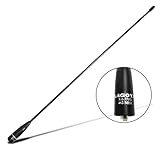
The G suffix identifies a GMRS-focused antenna, not merely a different color of the amateur NA-771. This distinction is central to making the correct purchase. The strongest reason to consider this model is its clearly defined purpose. A purchase makes more sense when its particular strengths solve an existing inconvenience instead of creating a new task to manage. Think about where it will be used, who will use it, and what has been disappointing about previous alternatives before comparing the specifications below.
Key Specifications
- Center tuning: 462 MHz
- Length: 15.6 inches
- Connector: SMA-female
- Maximum input: 10 W
What We Like
Service-specific tuning makes it easier to select an antenna around the frequencies actually being used. It is a clear option for a removable-antenna GMRS radio with the matching connection. This makes the option particularly relevant to the audience identified above. The appeal comes from a sensible match between design and purpose, so the strongest buying argument is the way these details address a specific need.
What Could Be Better
The extra length can snag or bend during close-quarters movement. It is not a universal fit for every GMRS radio, and fixed antennas cannot simply be replaced. It is useful to resolve this question before comparing prices. Saving money on a configuration that does not meet the intended need rarely represents good value, particularly when an exchange adds time or complicates a planned gift or project.
Final Verdict
Shortlist it for compatible GMRS handhelds when the longer format fits your working environment.
4. Nagoya NA-701G

The NA-701G brings GMRS tuning to a considerably shorter whip. It is designed for people who need a manageable handheld setup rather than the longest available antenna. This is a targeted choice rather than an automatic recommendation for every shopper. Its role in the comparison becomes clearer when you consider the setting in which it will be used. The relevant details are the exact configuration and the practical compromises that come with it, especially when a superficially similar alternative is designed for a different situation.
Key Specifications
- Center tuning: 462 MHz
- Length: 5.5 inches
- Connector: SMA-female
- Maximum input: 10 W
What We Like
The compact length is attractive for a radio carried on a belt or used while working around equipment. It keeps the selection focused on the correct service and connector. For shoppers with that priority, this is more meaningful than a cosmetic difference. It creates a clear point of comparison with the other products and helps explain why a different person might reasonably prefer a different selection.
What Could Be Better
Compactness is a tradeoff rather than a guaranteed performance advantage. Do not confuse this model with the amateur-band NA-701. Buyers should decide whether that compromise is acceptable in their own setting. A feature can be well executed and still be the wrong match for a particular user, so suitability deserves more weight than a general claim of quality.
Final Verdict
A strong convenience-oriented option for an appropriately equipped GMRS handheld.
5. Nagoya NA-24J

The NA-24J is the flexible long-whip alternative in this group. It targets compatible amateur handhelds and people who prefer a thinner, more compliant element. There is a good reason to compare this option separately instead of treating it as interchangeable with the others. Details that seem minor in a product photograph can become significant during everyday use. Match its documented features with your priorities first, then decide whether its strengths justify any extra attention to fit, care, or setup.
Key Specifications
- Bands: 144/430 MHz
- Length: 16 inches
- Connector: SMA-female
- Maximum input: 10 W
What We Like
Flexibility is helpful where a rigid antenna would be uncomfortable or vulnerable to incidental bumps. The design offers another handling option without moving away from dual-band amateur use. There is value in having a clear reason for the purchase. Buyers who recognize this need in their own routine can make a more confident comparison without relying on vague promises or treating every available feature as equally important.
What Could Be Better
Flexibility does not make an antenna indestructible. Repeatedly folding it sharply at the connector can still put stress on the base. The practical response is to verify the relevant details before purchase and to keep expectations aligned with the documented design. Do not assume that another version or an accessory shown elsewhere is automatically included in the configuration being ordered.
Final Verdict
Consider it when flexible handling is a higher priority than compact storage.
6. Nagoya NA-771R

The NA-771R uses a telescoping design so that its operating length and storage footprint need not be identical. It is most useful to users who remember to extend it appropriately. For the right user, a focused design can be more useful than an extensive collection of extras. This selection is most interesting when its intended role aligns with a task you already perform. Consider the entire ownership experience, including storage and routine care, rather than judging the purchase solely by the first impression or the product name.
Key Specifications
- Bands: 144/430 MHz
- Extended length: 15.6 inches
- Connector: SMA-female
- Maximum input: 10 W
What We Like
Retraction makes packing a handheld less cumbersome. The option is appealing for occasional field use where the radio travels in a bag between operating sessions. This is an advantage to evaluate in context rather than as an isolated selling point. When it matches your intended use, the design can make a more compelling choice than an alternative whose main strengths would rarely be used.
What Could Be Better
Telescoping sections require more careful handling than a simple flexible whip. Operating configuration matters, so do not treat the collapsed position as electrically equivalent. This does not make the product a poor choice, but it narrows the situations in which it is the most sensible one. Consider whether the tradeoff would affect you regularly or only under circumstances that are unlikely to arise.
Final Verdict
A practical storage-focused alternative for careful users who accept the extra handling step.
7. Nagoya NA-320A

The NA-320A adds the 1.25-meter amateur band to the more familiar dual-band combination. Its value depends on owning a radio and operating privileges that make that third band useful. This alternative deserves a closer look when the more conventional choices do not quite match your needs. The important question is whether its particular design offers an advantage in your situation. A careful comparison should include the version being ordered and any practical limitations, rather than assuming that a recognizable label guarantees suitability for every buyer.
Key Specifications
- Bands: 144/225/430 MHz
- Length: 17.7 inches
- Connector: SMA-female
- Maximum input: 10 W
What We Like
One appropriately tuned antenna can simplify carrying a compatible tri-band handheld. It is a more logical purchase than adding a third-band label to a radio that cannot transmit there. The useful distinction is the relationship between this feature and the intended task. Shoppers who have encountered the limitation it addresses have a concrete reason to shortlist it, while others may prefer one of the simpler alternatives.
What Could Be Better
The length is substantial, and the third band adds little for a dual-band-only user. Verify both the radio capabilities and local operating permissions. That concern deserves a place in the comparison alongside the strengths. If it affects a nonnegotiable requirement, choosing a different design is usually more useful than expecting this one to behave like a product intended for another purpose.
Final Verdict
Choose it for a genuine tri-band requirement rather than as an automatic upgrade for every handheld.
8. Diamond SRH77CA
The SRH77CA is an established long handheld antenna with an SMA-male connector. That connector is a decisive difference from the SMA-female Nagoya versions reviewed above. The buying case here rests on a specific combination of features, not on a claim that one option can serve everyone equally well. Look at how it would fit into an ordinary day and what you would have to change to accommodate it. Those practical details often reveal more about suitability than promotional language or a long specification list.
Key Specifications
- Bands: 2 m/70 cm
- Length: 15 inches
- Connector: SMA-male
- Power rating: 10 W
What We Like
It gives owners of suitably equipped radios a direct alternative without assuming that all SMA antenna sockets are the same. The manufacturer also lists broader receive coverage. That gives the product an identifiable place in the comparison. It is especially useful to buyers who can connect the feature with a recurring requirement, rather than selecting it because the description sounds more advanced.
What Could Be Better
Do not substitute the similarly named RH77CA, which uses a different connector. Broader receive coverage is not permission to transmit outside the rated amateur bands. Check this aspect carefully if you are buying for someone else or cannot easily evaluate the product before use. The best option is one whose limitations are understood in advance, with a suitable return policy if the configuration proves unsuitable.
Final Verdict
A useful shortlist choice when your radio requires SMA-male and a long whip suits your needs.
9. Comet SMA-24
The SMA-24 combines a long dual-band element with a very flexible construction. It is another option for radios that need SMA-male rather than the common Baofeng-style antenna connection. This selection is worth considering as a deliberate alternative to the more obvious starting points. Its features should be judged in the context of the person and setting involved. Identify the main reason you are shopping before comparing versions, since a feature that is valuable for one situation may add little practical benefit in another.
Key Specifications
- Bands: 2 m/70 cm
- Length: 15.75 inches
- Connector: SMA-male
- Maximum power: 20 W
What We Like
The flexible format is attractive when the antenna is close to the user during portable operation. Comet publishes separate band-specific specifications, which helps avoid treating gain as a single universal number. The advantage matters most when it aligns with a clear preference. This is a good example of why the best purchase is often the one with the right combination of details for a particular person, rather than the broadest appeal.
What Could Be Better
The SMA-24J is a different connector variant. Confirm the suffix and avoid buying an adapter unnecessarily when a correct direct-fit version exists. Shoppers should avoid overlooking this detail merely because the product has another appealing characteristic. Compare the complete set of requirements, including any conditions that would make the purchase inconvenient or unsuitable for the intended person.
Final Verdict
A well-defined flexible alternative for matching SMA-male handhelds.
10. Signal Stuff Super-Elastic Signal Stick
The dual-band Signal Stick uses a highly flexible element and is offered in several connector versions. Selecting the correct connector is part of the product decision, not an afterthought. A good comparison includes options that address different priorities, and this one fills a distinct role. Evaluate the complete configuration rather than one attractive detail in isolation. The right choice should support the way it will actually be used, with realistic expectations about its strengths and the adjustments or compromises that may still be necessary.
Key Specifications
- Bands: 2 m/70 cm
- Approximate length: 19 inches
- Versions: BNC, SMA-female, SMA-male
What We Like
The available connector choices make it easier to plan a direct connection or a deliberate BNC-based arrangement. Its flexible element provides a distinct handling alternative to conventional rubber-covered whips. This provides a sensible basis for choosing it over an otherwise comparable alternative. It also makes the recommendation conditional in a useful way: the benefit should matter to your routine, rather than simply looking impressive in a listing.
What Could Be Better
Its length is conspicuous on a small radio. Do not assume a flexible element can be cut or modified without changing tuning and warranty conditions. This is the main reason to compare it with the other recommendations before deciding. An informed choice accounts for both the appealing feature and the accompanying compromise, rather than assuming that a stronger specification in one area settles the whole decision.
Final Verdict
Best for users who value flexibility and can accommodate a long antenna while selecting the correct connector.
Buying Guide
Match the Radio Service Before Comparing Antennas
An amateur dual-band antenna and a GMRS-tuned antenna are not interchangeable simply because both are used on handheld radios. Start with the frequencies your radio is designed and authorized to use. A broad receive specification does not establish equally suitable transmit performance across that range. Write down the requirement that matters most before browsing. Then use it to eliminate options that cannot meet that requirement, even if they have other appealing features. This creates a useful shortlist and makes it easier to compare products on the same basis.
Check the Center Contact and Connector Gender
SMA terminology can be confusing because the appearance of external threads is not enough to identify connector gender. Compare the center pin or socket and the manufacturer description. BNC, standard SMA, and reverse-polarity SMA are distinct connections. A radio case can also obstruct an otherwise compatible connector. When comparing listings, make sure the details refer to the configuration being purchased. Similar photographs, alternate sizes, and bundled versions can obscure differences. Keep the exact model or variant in your notes so that the comparison remains consistent through checkout.
Choose a Length You Can Carry Comfortably
Long antennas are more noticeable near your face, clothing, and vehicle interior. Shorter models are easier to carry but involve electrical tradeoffs. Think about whether the radio is mainly used standing outside, sitting at a desk, or moving through confined areas. There is no single length that is most convenient everywhere. Think through an ordinary use case rather than an ideal one. Include the space available, the person involved, and any preparation that would be necessary. A feature is most valuable when it addresses a situation that actually occurs in that routine.
Understand Gain Claims and Range Expectations
Gain figures may use different reference conventions, and manufacturers may describe different bands separately. Do not rank unlike numbers as though they were directly comparable laboratory results. Range also depends on the other radio, antenna height, terrain, and obstructions. Better placement may matter more than changing a whip. A practical comparison considers the complete purchase. Include anything necessary to make the item useful, along with the time needed to learn, fit, maintain, or prepare it. A lower initial price does not automatically mean a more convenient ownership experience.
Compare Flexible, Fixed, and Telescoping Designs
A flexible antenna can improve comfort around the body, while a telescoping version offers a smaller storage footprint. The latter needs careful extension and protection from side loads. Flexibility should not be confused with permission to tie knots, crease the element repeatedly, or use the antenna as a carrying handle. Avoid using broad marketing language as a substitute for a relevant specification. If a detail is essential and not clearly stated, ask for clarification before ordering. It is better to resolve a compatibility or care question than to make an assumption that is difficult to undo.
Keep Adapters and Mechanical Stress Under Control
An adapter can solve a connection problem, but it also adds length and a possible leverage point at the radio socket. Whenever practical, select the correct direct-fit version. If you intentionally use BNC for frequent changes, support the radio and avoid twisting the antenna element while disconnecting it. Consider how the product will be kept useful after the first few uses. Storage, cleaning, replacement components, and clear instructions can all influence whether an attractive purchase remains practical. Match the maintenance requirements to what the user is realistically willing to do.
Buy the Exact Model From a Traceable Seller
Similar model numbers can differ by tuning, connector, or construction. Check the full suffix, packaging, and seller identity. For brands that warn about imitations, an authorized distribution channel is useful. Keep records of the model ordered so a problem can be discussed with the manufacturer rather than guessed from appearance. Finally, compare return conditions and the information supplied by the seller. Keep the original packaging until suitability has been established, and inspect the delivered version promptly. This is especially helpful when the product is a gift or will not be used immediately.
Safety Tips
Turn the radio off before changing antennas. Follow the radio manufacturer’s installation instructions and do not transmit with a loose, damaged, or unsuitable antenna. Tighten the connector by its base using reasonable hand pressure; do not use the long element as a wrench.
Keep antenna tips away from eyes and bystanders, and never approach overhead electrical lines with a radio or antenna. Do not assume an antenna change makes a radio legal for a different service. Fixed-antenna radios should not be modified casually. If a radio becomes unusually hot, its connector is damaged, or operation changes unexpectedly after a swap, stop and check the installation before transmitting again.
Frequently Asked Questions
Will a longer antenna always increase range?
No. Length alone does not establish a range improvement. Correct tuning, radio placement, terrain, and the receiving station all matter. A longer whip may also be less practical when it is carried close to the body or obstructed by clothing.
Can I use a ham-radio antenna on a GMRS handheld?
Some antennas will physically connect, but that does not make them the best electrical match. Prefer a correctly tuned GMRS model when that is your service, and confirm the radio permits a removable antenna.
Are the NA-771 and NA-771G the same?
No. The NA-771 is the amateur dual-band version reviewed here. The NA-771G is tuned for GMRS. Read the full model designation rather than ordering from a photograph of a similar black whip.
How do I choose SMA-male or SMA-female?
Use the radio documentation and compare the center contact. The antenna must mate correctly with the radio socket. If uncertain, ask the manufacturer with the exact radio model before ordering an antenna or adapter.
Is an adapter always a bad idea?
No. A deliberate adapter arrangement can be useful, particularly for quick antenna changes. The tradeoffs are another connection and added mechanical leverage, so direct fit is preferable when an adapter serves no practical purpose.
Can I replace the antenna on an FRS radio?
Many FRS radios use a fixed antenna as part of their certified design. Do not treat them like removable-antenna amateur or GMRS handhelds. Follow the radio manufacturer’s instructions and applicable service requirements.
What is the point of a telescoping antenna?
It reduces the storage footprint while allowing a longer operating configuration. The sections need careful handling, and the appropriate extension should follow manufacturer guidance rather than an assumption that every position behaves identically.
Does a higher power rating make an antenna transmit farther?
No. The rating describes a limit for the antenna under specified conditions, not an amplifier. The radio determines transmitted power, and the complete antenna system and environment determine how effectively that signal is used.
Should I cut a flexible antenna to improve it?
Do not make arbitrary cuts. Changing element length changes tuning and can affect warranty coverage. Unless the manufacturer provides a specific procedure for your model and purpose, choose an appropriate antenna rather than modifying one by guesswork.
Which option is the easiest starting point?
Start with service and connector. A matching NA-701 offers a manageable amateur dual-band format, while the NA-701G serves a similar convenience role for GMRS. Move to a longer or more specialized design only when its tradeoffs suit your routine.
Final Verdict
For a compatible amateur handheld, the Nagoya NA-771 is a straightforward long-whip starting point, while the NA-701 puts convenience first. GMRS users should compare the NA-771G and NA-701G instead of choosing by appearance alone.
The Diamond SRH77CA, Comet SMA-24, and Signal Stick provide useful alternatives for different connector and handling preferences. Choose the correct service, center contact, and manageable length before giving weight to gain claims. A properly matched antenna you can carry comfortably is a better purchase than an impressive specification that does not fit your radio or routine.