The best shoe lifts for uneven legs depend on a measured need, the amount of elevation advised, and the shoe that will hold the lift. A heel cushion, an adjustable wedge, a full-length raise, and an external shoe attachment are different tools. Choosing the tallest product is not a sound way to determine what your body needs.
This 2026 guide compares ten real options and explains their practical differences without promising to diagnose or cure pain. For a suspected leg-length discrepancy, a podiatrist, physical therapist, orthotist, or other qualified clinician can help distinguish a structural difference from other causes of an uneven feeling. The products below should be evaluated against that advice, especially after surgery or when a walking boot is involved.
Interesting Facts and Key Specifications
- Adjust-A-Lift uses three removable layers, each nominally 1/8 inch thick.
- Three 1/8-inch layers total a nominal 3/8-inch elevation.
- Clearly Adjustable offers 1 mm adjustment increments.
- Clearly Adjustable is supplied at a maximum stated elevation of 12 mm.
- Clearly Adjustable offers three heel-width sizes rather than one universal width.
- AliMed lists 1/8-, 1/4-, and 3/8-inch configurations for its layered lift.
- Hapad heel-lift widths include 2, 2.5, and 3 inches.
- The Sumifun design reviewed has four layers and an advertised maximum height of 1 inch.
- The selected benoo design uses three 1/8-inch layers.
- ProCare ShoeLift is offered in three sizes for its specific walking-boot balancing application.
Quick Comparison Table
| Product | Best For | Key Details | Main Consideration |
|---|---|---|---|
| Warwick Enterprises Adjust-A-Lift | Simple removable-layer adjustment | Design: heel wedge; Layers: three; Layer height: 1/8 inch; Maximum nominal lift: 3/8 inch; Cover: suede | Removing a layer changes the configuration, and the lift still needs enough room in the shoe. |
| Clearly Adjustable Heel Lift | Fine millimeter-level adjustment | Material: firm clear vinyl; Range: 1-12 mm; Increment: 1 mm; Sizes: three heel widths; Placement: beneath the insole | The firm construction will not feel like a gel cushion. |
| AliMed Adjustable Heel Lift | A traditional leather-covered layered lift | Layers: three rubber layers; Height options: 1/8, 1/4, 3/8 inch; Cover: leather; Format: tapered heel insert | Packaging varies between individual lifts and multipacks. |
| Hapad Heel Lifts | A felt lift in several fixed dimensions | Material: wool felt; Width choices: 2, 2.5, 3 inches; Height choices include: 3/16, 5/16, 7/16 inch; Attachment: adhesive backing | Felt cushioning and a firm height-maintaining plastic wedge do not behave identically under load. |
| SIIHEA Adjustable Heel Lifts | A removable-layer consumer option | Design: layered heel insert; Format: paired shoe lifts; Size selection: heel width and shoe fit; Height: verify the selected variant | Do not assume every SIIHEA version has identical layer thickness. |
| Dr.Foot Adjustable Orthopedic Heel Lift, Three-Layer Version | A gel-based adjustable alternative | Selected version: three layers; Material: PU gel; Format: heel insert; Color reviewed: beige; Attachment: self-adhesive design | Soft cushioning is not equivalent to a precisely maintained elevation. |
| Sumifun Four-Layer Heel Lift | A larger adjustable range in a roomy shoe | Layers: four; Advertised maximum: 1 inch; Nominal steps: 1/4 inch; Design: gel heel wedge | A high internal lift can reduce heel security and crowd the shoe. |
| Welnove Four-Layer Adjustable Shoe Lift | A taller removable-layer configuration | Layers: four; Advertised maximum: 1 inch; Format: internal heel lift; Selected listing: brown unisex version | Do not assume a one-inch product belongs in every sneaker. |
| benoo Three-Layer Adjustable Heel Lifts | Another small-increment rubber option | Layers: three; Layer height: 1/8 inch; Maximum nominal lift: 3/8 inch; Selected pack: four pieces | Pack quantity does not establish which side needs a lift. |
| ProCare ShoeLift | Temporary external balancing with a walking boot | Design: external shoe attachment; Sizes: small, medium, large; Fit: left or right; Intended use: opposite a fracture walking brace | It is intended for a securely fastened closed-toe shoe or sneaker. |
Top 10 Detailed Reviews
1. Warwick Enterprises Adjust-A-Lift
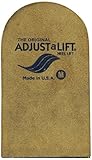
Adjust-A-Lift uses firm layered foam rubber with a suede top. It offers small, defined height changes rather than a tall cosmetic elevator insole. A useful way to evaluate this option is to start with the problem it is intended to solve. The configuration described here deserves attention when those needs match your own. Compare the exact version rather than relying on a brand name alone, because options within a product family can differ in their materials, included accessories, and intended application.
Key Specifications
- Design: heel wedge
- Layers: three
- Layer height: 1/8 inch
- Maximum nominal lift: 3/8 inch
- Cover: suede
What We Like
The straightforward peel-away design is easy to understand, and the tapered format is less bulky than a full-length insert. Individual layers provide a clear adjustment reference for a clinician-directed fitting. That is a practical advantage when it removes a recurring source of inconvenience. It also gives buyers a concrete reason to choose this configuration instead of paying attention only to appearance or the number of advertised features.
What Could Be Better
Removing a layer changes the configuration, and the lift still needs enough room in the shoe. Check whether the seller supplies one lift or a pair. This limitation should be considered before ordering, not discovered after the return window has become inconvenient. Check the current specifications and supplied configuration against your requirements; photographs and similar names do not establish that every version will be suitable.
Final Verdict
A useful starting point for a prescribed small heel elevation in suitable footwear.
2. Clearly Adjustable Heel Lift
Clearly Adjustable uses multiple thin vinyl layers and is designed for elevation rather than soft cushioning. Its manufacturer specifies fitting by the shoe heel-pocket width. This choice takes a different approach from simply adding more features. Its appeal depends on how well the underlying design matches a regular routine. Before placing an order, separate the characteristics you will use frequently from extras that sound attractive but may not change the experience. That distinction makes comparisons with the other selections much more meaningful.
Key Specifications
- Material: firm clear vinyl
- Range: 1-12 mm
- Increment: 1 mm
- Sizes: three heel widths
- Placement: beneath the insole
What We Like
The small increments are useful when a measured adjustment needs more precision than a coarse peel-away wedge. The layers can be removed or replaced, and the lift can be trimmed for the shoe. The benefit is easiest to appreciate when this feature matches an established preference. It supports a more focused purchase decision: choose the characteristic that improves everyday usefulness, rather than assuming that a longer feature list automatically represents better value.
What Could Be Better
The firm construction will not feel like a gel cushion. Correct placement under the footbed and careful trimming are important to avoid an uneven fit. Treat that tradeoff as part of the purchase rather than an unexpected defect. If the issue conflicts with your main reason for shopping, another option in this comparison may make more sense even if this one has attractive features.
Final Verdict
Best compared when precise, clinician-specified height adjustment is the priority.
3. AliMed Adjustable Heel Lift
AliMed offers a tapered rubber lift with a leather cover and peel-apart layers. It is a conventional design for small in-shoe adjustments rather than external sole modification. The strongest reason to consider this model is its clearly defined purpose. A purchase makes more sense when its particular strengths solve an existing inconvenience instead of creating a new task to manage. Think about where it will be used, who will use it, and what has been disappointing about previous alternatives before comparing the specifications below.
Key Specifications
- Layers: three rubber layers
- Height options: 1/8, 1/4, 3/8 inch
- Cover: leather
- Format: tapered heel insert
What We Like
Clearly stated layer heights make it easier to compare with a prescribed elevation. Multiple size options help distinguish heel-pocket fit from simply selecting the maximum height available. This makes the option particularly relevant to the audience identified above. The appeal comes from a sensible match between design and purpose, so the strongest buying argument is the way these details address a specific need.
What Could Be Better
Packaging varies between individual lifts and multipacks. The leather cover is not appropriate for someone specifically avoiding animal-derived materials. It is useful to resolve this question before comparing prices. Saving money on a configuration that does not meet the intended need rarely represents good value, particularly when an exchange adds time or complicates a planned gift or project.
Final Verdict
A sensible conventional option when the specified height and shoe fit align.
4. Hapad Heel Lifts
Hapad heel lifts use a different material approach from gel or vinyl products. They are sold in distinct widths and heights, so the configuration is selected before fitting. This is a targeted choice rather than an automatic recommendation for every shopper. Its role in the comparison becomes clearer when you consider the setting in which it will be used. The relevant details are the exact configuration and the practical compromises that come with it, especially when a superficially similar alternative is designed for a different situation.
Key Specifications
- Material: wool felt
- Width choices: 2, 2.5, 3 inches
- Height choices include: 3/16, 5/16, 7/16 inch
- Attachment: adhesive backing
What We Like
The range of fixed dimensions can be helpful when the required elevation is already known. The manufacturer emphasizes matching the lift width to the inside of the shoe heel. For shoppers with that priority, this is more meaningful than a cosmetic difference. It creates a clear point of comparison with the other products and helps explain why a different person might reasonably prefer a different selection.
What Could Be Better
Felt cushioning and a firm height-maintaining plastic wedge do not behave identically under load. Adhesive positioning also deserves care because repeated removal can affect the shoe lining. Buyers should decide whether that compromise is acceptable in their own setting. A feature can be well executed and still be the wrong match for a particular user, so suitability deserves more weight than a general claim of quality.
Final Verdict
Consider it when a clinician recommends a felt-based lift and the fixed dimensions suit the shoe.
5. SIIHEA Adjustable Heel Lifts

SIIHEA offers adjustable heel inserts in several listings and configurations. Exact height wording differs across versions, so selecting the correct listing matters more than relying on the brand name. There is a good reason to compare this option separately instead of treating it as interchangeable with the others. Details that seem minor in a product photograph can become significant during everyday use. Match its documented features with your priorities first, then decide whether its strengths justify any extra attention to fit, care, or setup.
Key Specifications
- Design: layered heel insert
- Format: paired shoe lifts
- Size selection: heel width and shoe fit
- Height: verify the selected variant
What We Like
The layered format offers a way to evaluate a smaller configuration instead of automatically using the full stack. It is worth comparing for shoppers who want a readily available consumer design. There is value in having a clear reason for the purchase. Buyers who recognize this need in their own routine can make a more confident comparison without relying on vague promises or treating every available feature as equally important.
What Could Be Better
Do not assume every SIIHEA version has identical layer thickness. Confirm the delivered configuration and avoid treating customer pain-relief claims as a substitute for an assessment. The practical response is to verify the relevant details before purchase and to keep expectations aligned with the documented design. Do not assume that another version or an accessory shown elsewhere is automatically included in the configuration being ordered.
Final Verdict
A comparison option only after its exact height and fit have been checked against the intended need.
6. Dr.Foot Adjustable Orthopedic Heel Lift, Three-Layer Version
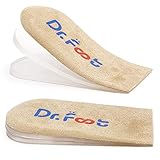
The three-layer Dr.Foot design offers a softer alternative to firm vinyl wedges. It should be distinguished from other Dr.Foot products with different layer counts or shapes. For the right user, a focused design can be more useful than an extensive collection of extras. This selection is most interesting when its intended role aligns with a task you already perform. Consider the entire ownership experience, including storage and routine care, rather than judging the purchase solely by the first impression or the product name.
Key Specifications
- Selected version: three layers
- Material: PU gel
- Format: heel insert
- Color reviewed: beige
- Attachment: self-adhesive design
What We Like
The gel construction may suit someone who prefers a cushioned feel, provided it still delivers the height required under load. A shaped heel format avoids replacing the entire footbed. This is an advantage to evaluate in context rather than as an isolated selling point. When it matches your intended use, the design can make a more compelling choice than an alternative whose main strengths would rarely be used.
What Could Be Better
Soft cushioning is not equivalent to a precisely maintained elevation. Adhesive performance and shoe space need checking, especially if the insert will be moved between shoes. This does not make the product a poor choice, but it narrows the situations in which it is the most sensible one. Consider whether the tradeoff would affect you regularly or only under circumstances that are unlikely to arise.
Final Verdict
Compare it for comfort-oriented fitting when its loaded height and stability are appropriate.
7. Sumifun Four-Layer Heel Lift

Sumifun offers a taller four-layer gel design than the small wedges at the beginning of this guide. Its maximum listed height should not be confused with a suitable starting height. This alternative deserves a closer look when the more conventional choices do not quite match your needs. The important question is whether its particular design offers an advantage in your situation. A careful comparison should include the version being ordered and any practical limitations, rather than assuming that a recognizable label guarantees suitability for every buyer.
Key Specifications
- Layers: four
- Advertised maximum: 1 inch
- Nominal steps: 1/4 inch
- Design: gel heel wedge
What We Like
Removable layers provide configuration choices, and the product may be relevant when a professional has identified a need that an ordinary low lift cannot meet. The useful distinction is the relationship between this feature and the intended task. Shoppers who have encountered the limitation it addresses have a concrete reason to shortlist it, while others may prefer one of the simpler alternatives.
What Could Be Better
A high internal lift can reduce heel security and crowd the shoe. A larger discrepancy may be better addressed with professional footwear modification rather than a tall internal stack. That concern deserves a place in the comparison alongside the strengths. If it affects a nonnegotiable requirement, choosing a different design is usually more useful than expecting this one to behave like a product intended for another purpose.
Final Verdict
A specialized comparison, not the default choice for someone guessing at a leg-length difference.
8. Welnove Four-Layer Adjustable Shoe Lift

This Welnove design is another higher-range internal lift. It belongs in a different decision category from a thin wedge used for a small measured adjustment. The buying case here rests on a specific combination of features, not on a claim that one option can serve everyone equally well. Look at how it would fit into an ordinary day and what you would have to change to accommodate it. Those practical details often reveal more about suitability than promotional language or a long specification list.
Key Specifications
- Layers: four
- Advertised maximum: 1 inch
- Format: internal heel lift
- Selected listing: brown unisex version
What We Like
The removable-layer construction allows comparison of configurations within the product design. It may be worth discussing with a fitter when the shoe has sufficient depth and the height is professionally selected. That gives the product an identifiable place in the comparison. It is especially useful to buyers who can connect the feature with a recurring requirement, rather than selecting it because the description sounds more advanced.
What Could Be Better
Do not assume a one-inch product belongs in every sneaker. Raising the heel can alter shoe retention and pressure around the collar. Check this aspect carefully if you are buying for someone else or cannot easily evaluate the product before use. The best option is one whose limitations are understood in advance, with a suitable return policy if the configuration proves unsuitable.
Final Verdict
Consider only when the prescribed configuration and available shoe volume justify a taller internal design.
9. benoo Three-Layer Adjustable Heel Lifts

The benoo three-layer design follows the small-increment approach rather than a tall elevator format. The selected pack contains multiple pieces, so quantity should be checked before comparing costs. This selection is worth considering as a deliberate alternative to the more obvious starting points. Its features should be judged in the context of the person and setting involved. Identify the main reason you are shopping before comparing versions, since a feature that is valuable for one situation may add little practical benefit in another.
Key Specifications
- Layers: three
- Layer height: 1/8 inch
- Maximum nominal lift: 3/8 inch
- Selected pack: four pieces
What We Like
A clearly described layer height helps compare it with other low lifts. Multiple pieces may also be convenient when a clinician has advised consistent fitting across more than one pair of shoes. The advantage matters most when it aligns with a clear preference. This is a good example of why the best purchase is often the one with the right combination of details for a particular person, rather than the broadest appeal.
What Could Be Better
Pack quantity does not establish which side needs a lift. Do not place identical lifts in both shoes when the goal is a prescribed one-sided adjustment unless advised to do so. Shoppers should avoid overlooking this detail merely because the product has another appealing characteristic. Compare the complete set of requirements, including any conditions that would make the purchase inconvenient or unsuitable for the intended person.
Final Verdict
A practical alternative to compare by dimensions, stability, and the exact required configuration.
10. ProCare ShoeLift
ProCare ShoeLift is an external accessory for the shoe opposite a walking boot. It is included as a purpose-specific alternative, not as a replacement for a small internal heel wedge. A good comparison includes options that address different priorities, and this one fills a distinct role. Evaluate the complete configuration rather than one attractive detail in isolation. The right choice should support the way it will actually be used, with realistic expectations about its strengths and the adjustments or compromises that may still be necessary.
Key Specifications
- Design: external shoe attachment
- Sizes: small, medium, large
- Fit: left or right
- Intended use: opposite a fracture walking brace
What We Like
The external arrangement avoids taking up space inside the shoe. Its stated purpose directly addresses the temporary height difference created by some fracture walking braces. This provides a sensible basis for choosing it over an otherwise comparable alternative. It also makes the recommendation conditional in a useful way: the benefit should matter to your routine, rather than simply looking impressive in a listing.
What Could Be Better
It is intended for a securely fastened closed-toe shoe or sneaker. It is not a general prescription for permanent leg-length discrepancy or an accessory for loose sandals. This is the main reason to compare it with the other recommendations before deciding. An informed choice accounts for both the appealing feature and the accompanying compromise, rather than assuming that a stronger specification in one area settles the whole decision.
Final Verdict
Choose this category only for the walking-boot situation and with appropriate clinical guidance.
Buying Guide
Get the Difference Assessed Before Selecting a Height
A sensation that one leg is shorter does not establish the amount or cause of a discrepancy. Do not copy another person’s lift height. Seek assessment when symptoms are persistent, after a joint replacement, or when a change in walking has appeared. Product marketing cannot determine your correction. Write down the requirement that matters most before browsing. Then use it to eliminate options that cannot meet that requirement, even if they have other appealing features. This creates a useful shortlist and makes it easier to compare products on the same basis.
Distinguish Heel Elevation From a Full-Sole Raise
A heel wedge raises the rear of the foot and changes its relationship to the shoe. A full-sole adaptation distributes elevation differently. The choice can matter when the required correction is larger or when an internal lift compromises fit. Discuss the design with the professional managing the problem. When comparing listings, make sure the details refer to the configuration being purchased. Similar photographs, alternate sizes, and bundled versions can obscure differences. Keep the exact model or variant in your notes so that the comparison remains consistent through checkout.
Compare Adjustment Increments and Loaded Height
Nominal layer thickness is useful, but materials may compress differently when you stand and walk. Firm vinyl and soft gel are not interchangeable merely because their advertised heights match. Select the intended configuration using professional guidance rather than progressively adding layers until discomfort seems different. Think through an ordinary use case rather than an ideal one. Include the space available, the person involved, and any preparation that would be necessary. A feature is most valuable when it addresses a situation that actually occurs in that routine.
Measure the Heel Pocket and Available Shoe Depth
The lift needs to sit securely without curling or pushing the heel out of the shoe. Width, taper, removable footbeds, and collar height all matter. A supportive closed shoe with a secure fastening is often easier to fit than a shallow slip-on or an open-backed style. A practical comparison considers the complete purchase. Include anything necessary to make the item useful, along with the time needed to learn, fit, maintain, or prepare it. A lower initial price does not automatically mean a more convenient ownership experience.
Choose Materials for the Intended Role
Soft gel emphasizes cushioning, while firmer layered products emphasize elevation. Felt offers another feel and attachment method. None is inherently best for every condition. Consider whether the lift must maintain a specified height, how the lining interacts with it, and whether the material creates pressure or movement. Avoid using broad marketing language as a substitute for a relevant specification. If a detail is essential and not clearly stated, ask for clarification before ordering. It is better to resolve a compatibility or care question than to make an assumption that is difficult to undo.
Use a Consistent Fitting and Review Routine
Keep track of which shoe contains the prescribed lift and how the configuration is set. Follow the clinician’s adaptation schedule and manufacturer placement directions. Reassess when changing footwear, because a lift that fits one shoe may not sit safely in another with a narrower heel pocket or less depth. Consider how the product will be kept useful after the first few uses. Storage, cleaning, replacement components, and clear instructions can all influence whether an attractive purchase remains practical. Match the maintenance requirements to what the user is realistically willing to do.
Recognize When Professional Footwear Adaptation Is Better
If an internal stack creates instability, crowding, or poor heel retention, adding more layers is not the solution. Larger raises or complicated gait needs may require an external sole adaptation or a custom orthotic approach. Temporary walking-boot balancing also deserves a purpose-specific product rather than improvised stacking. Finally, compare return conditions and the information supplied by the seller. Keep the original packaging until suitability has been established, and inspect the delivered version promptly. This is especially helpful when the product is a gift or will not be used immediately.
Safety Tips
Do not self-prescribe a large correction or stack unrelated inserts. Stop using a lift that causes new pain, numbness, rubbing, instability, or a feeling that the heel is slipping out of the shoe. Check that the lift stays flat and that fastening the shoe does not create excessive pressure.
People with diabetes, reduced sensation, circulation problems, recent surgery, or an active foot wound should seek individualized advice before changing shoe fit. Inspect the skin and shoe lining during the initial fitting period. A lift may be part of a treatment plan, but persistent or worsening symptoms need reassessment. The correct side, height, and wearing schedule should come from the clinical situation, not a product title or an online review.
Frequently Asked Questions
How do I know which leg needs a lift?
Have the difference assessed rather than judging from a mirror or a single standing position. The cause and amount of an uneven feeling can require a clinical examination, and the correct side should be established before purchase.
Should a lift correct the entire measured difference?
Not necessarily. The appropriate correction and adaptation schedule are clinical decisions. Do not assume that the maximum height printed on a package should be used or that a larger correction produces a better result.
Are gel heel cups and heel lifts the same?
No. A cushion may mainly soften contact, while a lift is selected to provide elevation. A soft product can compress under load, so cushioning comfort and maintained height should be assessed separately.
Can I use the lift in every pair of shoes?
Not automatically. The heel pocket, footbed, collar, and available depth vary. A configuration that fits a roomy walking shoe may be unstable in a shallow dress shoe. Check each pair separately.
Do both shoes need a lift?
That depends on the reason for use. A one-sided leg-length correction differs from a clinician-directed bilateral heel raise for another condition. Do not transfer advice between those situations without checking.
Is a one-inch internal lift a good starting point?
No. A taller listing does not establish a suitable starting height. Large internal raises can interfere with shoe retention and may be inappropriate when a professional footwear adaptation would be safer and more effective.
Can I trim an adjustable lift?
Only when the manufacturer allows it, and only in a way consistent with the fitting instructions. Clearly Adjustable provides trimming guidance. Other products may depend on an intact shape or cover, so check before cutting.
What should I do if my heel starts slipping?
Stop and reassess the shoe and lift combination. Tightening the shoe excessively or adding more adhesive may not solve a lack of internal depth. Ask the fitter whether a different shoe or external adaptation is needed.
Can a lift help while I wear a walking boot?
A purpose-designed external balancer such as ProCare ShoeLift may be appropriate for the opposite shoe in certain walking-boot situations. It should be matched to a secure shoe and the advice for your injury.
Which product is the most precise to adjust?
Among these designs, Clearly Adjustable specifies 1 mm removable layers. Precision alone does not determine suitability: the required height, material behavior, placement, and shoe fit must still match the clinical recommendation.
Final Verdict
For a small, professionally selected heel elevation, Adjust-A-Lift and AliMed Adjustable Heel Lift provide straightforward layer-based options. Clearly Adjustable deserves particular attention when fine millimeter increments and a firm construction are useful. Hapad offers fixed felt dimensions with a different feel and fitting approach.
The taller gel products require more caution about shoe depth and stability. ProCare ShoeLift belongs to the separate category of temporary walking-boot balancing. Select the right type and measured configuration first. A comfortable, secure shoe and appropriate assessment matter more than buying the tallest or softest lift.