After breast augmentation, the right support garment depends on your operation, your surgeon’s instructions and your stage of recovery. A front closure, adjustable straps or a particular band can make a garment easier to use, but a product described as a recovery bra is not automatically appropriate for every patient. Ask your surgical team which features, compression and size are suitable before ordering or changing what you wear.
This guide compares four real styles whose manufacturers mention breast augmentation, using product descriptions and instructions. It does not claim clinical testing or guarantee a recovery result. Some garments include features such as a stabilizer band or drain pockets that may be useful only when your clinician recommends them. Follow your surgeon’s directions for dressings, garment use and activity; contact the care team if the fit is painful or you have concerns.
Interesting Facts About Bras After Breast Augmentation
- Postoperative instructions differ among surgeons and patients. The American Society of Plastic Surgeons advises following your own surgeon’s directions for support garments and incision care. A general product description cannot replace those instructions.
- A front closure can change how a garment is put on and removed. Some designs use hooks and others use a zipper. The practical choice depends on your movement restrictions, dressings and the closure your clinician approves.
- Adjustable shoulder closures are distinct from a front closure. A garment may offer one or both, and the location of adjustment affects how a patient or caregiver can put it on. Check the exact model and ask the care team what is appropriate.
- Compression is not a single universal setting. Recovery garments are made with different designs and intended levels, while an individual patient may need a specific approach. Ask your surgeon whether a garment’s pressure and fit are suitable.
- A stabilizer band is a separate feature from the bra’s basic front closure. Some models integrate one, but the need for it is individualized. Do not add or tighten a band without direction from the surgical team.
- Drain pockets are present on some post-surgical garments and absent on others. Whether a pocket is needed depends on the patient’s care plan. Do not assume that every augmentation uses drains or that every pocketed garment is required.
- A longer lower band may sit in a different place from a short band. Placement matters when dressings or an incision are present. Show the garment to your care team if you are unsure where it will contact the surgical area.
- Some recovery garments group more than one cup size into a sizing category. This differs from selecting a conventional single cup label. Use the manufacturer’s size guide together with the clinician’s instructions.
- Care and skin contact matter during recovery. Follow the garment label and your team’s instructions for dressings and hygiene. Manufacturer instructions for compression textiles caution against placing them directly on open wounds.
Quick Comparison Table
| Product | Best For | Key Specifications | Main Consideration |
|---|---|---|---|
| Marena Original Recovery Bra B01G | Front and shoulder adjustment when approved | Three-row front hook-and-eye closure; Adjustable hook-and-eye shoulder closures; Longer band and outward-facing seams | Size, pressure and incision contact require clinician approval |
| Marena Implant Stabilizer Recovery Bra B15 | An integrated stabilizer only when prescribed | Built-in elastic stabilizer band; Adjustable padded shoulder closures; Longline construction and outward-facing seams | A stabilizer band is not appropriate for every patient |
| AnaOno Front Closure Post Surgical Bra | Removable drain pockets when needed | Front closure; Adjustable, opening shoulder straps; Removable drain pockets | Drain pockets and fit should match the individual care plan |
| Amoena Leyla Post Surgery Bra | A front-zip design for clinician-directed use | Front zipper with hooks underneath; Adjustable shoulder closures; Manufacturer describes use after several breast procedures | Confirm the exact version and clinician-recommended compression |
A List Of Highly Popular Products Chosen By A Large Number Of Customers!


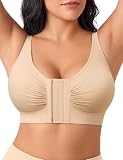

Top 4 Detailed Reviews
Marena Original Recovery Bra B01G

Marena describes its B01G Original Recovery Bra for use following breast augmentation and other procedures. It has a front hook-and-eye closure, adjustable shoulder closures, outward-facing seams and a longer lower band. Its sizing groups two cup sizes in a category. These details make it a specific garment to discuss with a surgical team, not a universal recommendation for postoperative care.
The front and shoulder adjustments can be relevant when a patient needs help dressing or cannot comfortably move their arms in the usual way. Ask your clinician how the closures should be set and whether the lower band will sit appropriately relative to dressings and incision sites. Do not infer the correct pressure from the number of available settings. A garment that feels excessively tight, shifts into a sensitive area or interferes with a dressing should be reviewed with the team.
The manufacturer offers a size chart and describes machine washing. Confirm the exact size with your care team, especially if measurements may change during recovery, and follow the garment label for cleaning. The outward seams and longer length are construction features rather than a guarantee of a particular healing outcome. If your surgeon provides a different garment or instruction, follow that plan.
Key Specifications
- Three-row front hook-and-eye closure
- Adjustable hook-and-eye shoulder closures
- Longer band and outward-facing seams
What We Like
- Front and shoulder closures offer several adjustment points.
- Longer band and outward-facing seams are described by the manufacturer.
- A specific size chart supports a conversation with the care team.
What Could Be Better
- The correct size and pressure are individual clinical decisions.
- Band placement and closures may not suit every dressing or incision.
Final Verdict
Discuss B01G with your surgeon when a front-adjustable, longer recovery garment is requested. Confirm size and placement before use.
Marena Implant Stabilizer Recovery Bra B15

Marena B15 is a recovery bra with an integrated elastic stabilizer band and positioning guides. The manufacturer also describes padded adjustable shoulder closures, outward-facing seams and a longer lower band. Its stated design is associated with breast augmentation, making it a distinct product from a simple front-closure support bra.
The integrated band is the key reason to consult the surgical team before considering it. A surgeon may recommend a particular band or may not want one for a given patient or procedure. The product’s availability does not establish that a stabilizer is necessary, where it should sit or how tightly it should be adjusted. Ask the team to review the exact garment and provide instructions if they approve it.
The manufacturer’s grouped cup sizing and adjustable closures are useful details for comparing configurations, but sizing during recovery is not a routine fashion fitting. The placement of the longline portion, any dressing and the shoulder closures can affect whether a garment is suitable. Do not claim a specific clinical outcome from the band or modify prescribed support based on a retail description. Follow your clinician’s directions and raise any discomfort or concern promptly.
Key Specifications
- Built-in elastic stabilizer band
- Adjustable padded shoulder closures
- Longline construction and outward-facing seams
What We Like
- Integrated stabilizer is available for a care plan that specifically calls for it.
- Adjustable padded shoulder closures offer a defined fitting feature.
- Longline and outward seam construction are described by the manufacturer.
What Could Be Better
- A stabilizer is not a default need after augmentation.
- Position and pressure require direct guidance from the surgical team.
Final Verdict
Consider B15 only when your clinician specifically approves its integrated stabilizer and fit. Do not add or tighten the band based on a general product guide.
AnaOno Front Closure Post Surgical Bra

AnaOno describes this Front Closure Post Surgical Bra for postoperative needs including augmentation. It has a front closure, adjustable straps that can be opened and detachable drain pockets. The brand also describes pockets for optional forms or pads. The drain feature makes it distinctive, but it should not be taken as evidence that every augmentation patient has drains or needs this garment.
If drains are part of your own care, ask the surgical team whether the removable pockets and their placement are compatible with your instructions. Never move, secure or manage a drain differently solely because a garment has a pocket. Similarly, ask whether the front closure and shoulder access are appropriate for your dressings and movement restrictions. The product description cannot replace hands-on instructions from the clinician who knows your procedure.
The manufacturer lists a cotton and elastic composition and a gentle cold-water wash. Check the current garment label and sizing guide, and ask the team how to choose a size when swelling or dressings are expected. A soft fabric description is not a promise that every patient will find a garment comfortable. Assess any pressure or rubbing with the care team and follow their advice about when and how to change it.
Key Specifications
- Front closure
- Adjustable, opening shoulder straps
- Removable drain pockets
What We Like
- Front closure and opening straps provide access features.
- Removable drain pockets are available when the care plan calls for them.
- Manufacturer provides material and care details.
What Could Be Better
- Drain pockets are unnecessary for some patients and require correct use.
- The suitable size and support level must be determined individually.
Final Verdict
Discuss this AnaOno model when your team approves its closure and, if relevant, its removable drain pockets. Follow your own drain and dressing instructions.
Amoena Leyla Post Surgery Bra

Amoena describes Leyla as a postoperative compression bra for several breast procedures, including augmentation. The manufacturer identifies a front zipper with hooks underneath and adjustable shoulder closures. These features may be relevant to a care plan that calls for a front-opening garment, but the appropriate pressure and timing must come from the clinician.
The manufacturer’s instructions describe considerations for compression textiles and caution against placing them directly on open wounds. Ask your care team how the garment should sit over prescribed dressings, whether the zipper and shoulder closures are suitable and which size or version is intended. A product described for clinical use should not be interpreted as permission to change your surgeon’s instructions or to remove a prescribed dressing.
Check the precise product version, local availability and size chart before ordering. The level of compression and closure details can differ across postoperative products. If a zipper is difficult to operate or creates pressure in a sensitive area, contact the care team rather than forcing it. Follow the label and instructions for cleaning, and ask how to manage a replacement garment during washing. This comparison describes construction and does not independently establish a treatment benefit.
Key Specifications
- Front zipper with hooks underneath
- Adjustable shoulder closures
- Manufacturer describes use after several breast procedures
What We Like
- Front zipper and underlying hooks provide a defined closure arrangement.
- Adjustable shoulder closures are described by the manufacturer.
- Manufacturer documentation discusses postoperative use and precautions.
What Could Be Better
- Version, compression and size must match the clinician’s plan.
- A zipper or closure may not be suitable for every dressing or incision.
Final Verdict
Consider Leyla only after your surgical team approves the exact version, size and placement. Follow its clinical instructions rather than selecting compression on your own.
Buying Guide
Ask the surgical team before choosing a garment
Before surgery or before changing a prescribed garment, ask your surgeon which type of bra or support is appropriate for your procedure. Bring the exact product name and a picture or description of its closures, band and compression features. Ask whether the team will provide a garment and when an additional one would be needed.
The American Society of Plastic Surgeons notes that postoperative instructions vary. A bra advertised for augmentation may still be unsuitable for your incision, dressings or recovery plan. Do not substitute a retail recommendation for your team’s instructions. Write down the answers and ask whom to contact if the garment becomes uncomfortable or difficult to use.
Useful questions include whether the garment should have a front closure, whether a stabilizer is part of the plan, how to choose a size and whether the garment can be removed for washing. You can also ask whether a caregiver should help with the first change. These answers make the product features easier to compare without guessing at medical needs.
Confirm size and expected changes with the clinician
A familiar everyday bra size may not describe the size needed over postoperative dressings or during swelling. Some manufacturers use grouped cup sizes or specific measurement methods. Ask the care team when and how to measure, whether the manufacturer chart applies to your situation and what to do if you are between sizes.
Do not choose a smaller garment to increase pressure unless your clinician explicitly directs it. Excessive tightness can cause discomfort and may interfere with care. If the fit changes, ask whether an adjustment or different size is appropriate instead of altering the garment yourself. A clear fitting plan is more useful than relying on a general size label.
Compare front and shoulder closures
Front closures can use hooks, zippers or other fasteners. Shoulder closures may open or adjust independently, which can change how a garment is put on. Consider whether you will have help dressing and what movements your surgeon permits. A closure that looks simple in a product photo can still be awkward if it is difficult to reach or creates pressure near a sensitive area.
Ask the care team to demonstrate how to use the approved garment. Check whether the closure has an underlying guard or another feature relevant to your dressings, but do not infer that a particular closure is medically preferable for everyone. Confirm that you or a caregiver can operate it as instructed.
If you are considering a zipper, ask whether the zipper and any backing will rest away from the areas your team wants protected. If hooks are proposed, ask how the team wants them fastened and whether adjustment is expected. Do not practice by removing a prescribed garment unless the team says it is appropriate.
Understand compression and stabilizer features
Compression garments and support bras can have different constructions and intended pressure. Some models also include a stabilizer band. These are not interchangeable decisions. Your surgeon can explain whether a particular garment or band is needed, where it should sit and whether it should be adjusted during recovery.
Do not add a separate band, tighten an integrated band or layer garments simply because a product page describes compression. More pressure is not automatically better. If a closure or band causes pain, rubbing or a concerning change, contact your care team for instructions. Retain the product information so the team can identify exactly which garment you are using.
Check dressings, drains and incision placement
Your team will give instructions about dressings and any drains. A recovery garment may have a longer band, outward seams or removable pockets, but these features are only useful when compatible with your particular care plan. Ask where the lower edge and closures should sit and whether a pocket is appropriate for any drain you have.
Never change drain placement or remove dressings because a garment has a convenient opening. Manufacturer instructions for postoperative compression textiles caution against direct placement on open wounds. Follow the surgical team’s directions for dressings and contact them if a garment rubs, shifts or interferes with prescribed care.
A longer band can lie below the fold beneath the breast, but the relationship between a particular band and an individual incision depends on the operation and the garment. Show the team the exact design instead of assuming that a longer or shorter style is inherently safer for every patient.
Plan for washing and a second garment
Ask your care team when a prescribed garment may be removed for washing and whether an approved second garment is needed. Do not assume you can pause support for a particular period without checking. If a replacement is recommended, confirm that the same model and size remain suitable and that the team approves the changeover.
Read the exact garment label for washing and drying. Materials and closures differ: one manufacturer may recommend a gentle cold wash while another provides different instructions. Keep clean garments and prescribed dressings separate from used items according to your care team’s advice. A spare is helpful only if it fits and is used as directed.
Before purchasing a spare, check its return conditions and the time needed for delivery. Your surgeon may supply or recommend a specific garment, and a separately purchased style may not be interchangeable. Having the care team’s written model and size information can reduce confusion for someone helping with shopping or laundry.
Know when to ask for help
Before leaving the clinic, ask for written instructions about whom to contact, what symptoms to report and when to seek urgent care. A shopping guide cannot identify the cause of pain, swelling or a skin change. If the garment becomes uncomfortable or the fit changes, use the contact information provided by your surgical team rather than guessing how to adjust it.
For severe or rapidly concerning symptoms, follow your team’s emergency instructions or contact local emergency services. Keep follow-up appointments and ask when it is appropriate to move from a postoperative garment to another type of bra. The timeline and the right choice depend on the procedure and individual recovery.
If you are uncertain whether a change is urgent, contact the clinician using the instructions you received rather than waiting for an online comparison to provide a diagnosis. Keep a list of medications and relevant postoperative instructions available for that conversation, and explain which garment and closure you are wearing.
Safety Tips
Your surgeon’s directions take priority over a shopping guide. Ask the team which garment, compression, stabilizer band and wearing schedule are appropriate, and when you may change styles. Do not place a garment against an open wound contrary to your care instructions or adjust prescribed dressings on the basis of a product description.
If a garment causes increasing pain, marked pressure, skin irritation or another concerning change, contact your surgical team promptly for advice. Follow the specific warning signs and emergency instructions you were given after surgery. Seek urgent help for severe symptoms according to your clinician’s directions or local emergency services. A product cannot prevent or treat a surgical complication.
Frequently Asked Questions
What bra should I wear immediately after augmentation?
Follow the garment and wearing instructions given by your surgeon. The appropriate support, pressure and timing vary by procedure and patient. Ask the team before substituting a product bought separately.
Is a front closure required?
A front closure can make a garment easier to put on for some patients, but it is not a universal requirement. Ask your care team whether a particular closure is suitable for your movement restrictions and dressings.
Do I need an implant stabilizer band?
Not necessarily. Some patients receive specific instructions about a band, while others do not. Ask your surgeon whether one is needed and how it should be positioned. Do not add or tighten a band on your own.
How tight should a recovery bra be?
Your surgical team should guide the size and pressure for your procedure. Do not assume tighter is better. Contact the team if the garment causes pain, excessive pressure, rubbing or another concerning change.
Do all augmentation patients need drain pockets?
No. Drain use depends on the individual procedure and care plan. A removable pocket can be a feature to discuss if your team uses drains, but follow their instructions for managing them.
Can I use my usual bra size?
Your usual size is not necessarily the correct postoperative size, especially with dressings or changes in swelling. Ask when and how to measure and use the specific manufacturer’s size chart with your team’s guidance.
When can I switch to an everyday or underwire bra?
Ask your surgeon. The appropriate timing depends on your procedure and recovery. Do not use a general retail timetable as a substitute for the instructions given at your follow-up.
Can the bra be worn directly over an open incision?
Follow the team’s dressing instructions. Manufacturer guidance for postoperative compression textiles cautions against direct placement on open wounds. Ask the surgical team if you are unsure how the garment should sit.
Should I purchase a second recovery bra?
A second approved garment can be useful when washing, but ask your team whether it is needed and when you may change garments. Confirm that any replacement has the right model, size and support for your care plan.
What if the garment causes pain or skin irritation?
Contact your surgical team for advice and follow the warning signs they provided. Do not assume discomfort is expected or compensate by changing prescribed support without guidance. Seek urgent help for severe symptoms as directed.
Final Verdict
Marena B01G offers front and shoulder adjustment in a longer recovery design. Marena B15 adds an integrated stabilizer feature that should be used only if your surgeon recommends it. AnaOno’s Front Closure Post Surgical Bra includes removable drain pockets, while Amoena Leyla has a front zipper and adjustable shoulder closures. Each offers different features and sizing considerations.
The best option is the one your care team approves for your specific procedure and recovery stage. Confirm the size, pressure, closure and placement before purchasing, and ask how to care for and change the garment. A convenient feature does not replace individualized postoperative instructions.