A BESTEK 150W power inverter can provide a small AC outlet in a compatible vehicle, but the 150W label needs context. The vehicle’s accessory socket, the inverter’s continuous rating, the connected device’s requirements, and any simultaneous USB load all matter. A small inverter is intended for suitable electronics, not a replacement for a household circuit.
This 2026 guide compares nine real 150W-class configurations, including three clearly distinguished BESTEK layouts and alternatives with different ports, placement, and waveform documentation. Nine are included rather than filling the list with products whose actual continuous rating or identity could not be established. The comparison uses current product information and manufacturer documents without claiming laboratory or road testing.
Some retail listings and model names have changed over time. A current USB-C version may share a name with an older USB-A model, and an old product identifier can now lead to a different wattage. Check the exact delivered model, rating plate, and manual before connecting equipment.
Start with what you want to power. If the device can use an appropriate direct USB-C or vehicle DC charger, that may avoid unnecessary conversion through AC. If AC is required, choose the inverter and vehicle supply together rather than assuming that a nominal 150W product can deliver its full rating from every socket.
Interesting Facts and Key Specifications
- The reviewed wide-input BESTEK listing specifies an 11–17V input range.
- Its current USB-C rating is 30W PD and USB-A rating is 18W.
- The current MRI1511C PD30W configuration has one AC outlet.
- The reviewed MRI1511U-PD30W is also a 150W-class configuration.
- FOVAL’s dual conventional USB ports share a 3.1A total rating.
- The reviewed YSOLX model is rated 150W continuous, with a 12V input.
- PV150 lists 150W continuous and 300W instantaneous peak output.
- Scosche PI150M includes a 20-inch cable arrangement.
- Scosche PI150CUP lists a 3-foot cable and two AC outlets.
- Energizer EP150 lists 150W continuous, 300W peak, and a 60Hz pure-sine-wave output.
Quick Comparison Table
| Product | Best For | Key Details | Main Consideration |
|---|---|---|---|
| BESTEK 150W Wide-Input USB-C Inverter | A corded option with modern USB charging | Reviewed listing: 11–17V input version; AC class: 150W, nominal 110V; USB-C: 30W PD; USB-A: 18W; Format: cable-connected compact unit | The advertised wide input range is not blanket approval for every vehicle. |
| BESTEK MRI1511C PD30W Direct-Plug Inverter | A pivoting direct-plug layout | AC class: 150W, 12V DC to nominal 110V AC; AC outlets: one; USB-C: 30W PD; USB-A: 18W QC; Format: pivoting direct plug | The body and connected AC plug can obstruct nearby controls in some vehicles. |
| BESTEK MRI1511U PD30W Rotating-Plug Inverter | Another compact rotating-plug arrangement | Reviewed version: MRI1511U-PD30W; Continuous AC class: 150W; USB-C: 30W PD; USB-A: 18W QC; AC outlet: one | It overlaps substantially with the PD30W MRI1511C. |
| FOVAL 150W Car Power Inverter, Classic Red | A basic corded AC and USB-A option | Rated AC class: 150W; Input: 12V DC; Output: nominal 110V AC; AC outlets: one; Dual USB: 3.1A shared total | The two USB ports do not each provide the full shared rating. |
| YSOLX 150W Compact Car Inverter | A small conventional USB-A alternative | Rated continuous class: 150W; Input: 12V DC; AC output: nominal 110V; AC outlets: one; Dual USB: 3.1A shared total | Verify the actual 150W model and delivered label. |
| Eaton Tripp Lite PowerVerter PV150 | A documented AC-focused portable inverter | Continuous output: 150W; Instantaneous peak: 300W; Input: 12V DC; Output: 120V AC; Outlet: one; Cable: approximately 3 feet | The peak rating is not usable continuous capacity. |
| Scosche InVert 150, PI150M | A detachable-cable design from an automotive accessory brand | Rated class: 150W; Input: 12V accessory socket; AC output: nominal 110V; Ports: one AC, one USB-A, one USB-C; Cable: 20 inches | A USB-C connector alone does not establish high-wattage Power Delivery. |
| Scosche InVert 150 Cup Holder, PI150CUP | A cup-holder layout with faster USB ports | Rated class: 150W; AC outlets: two; USB-C: 30W; USB-A: 18W; Cable: 3 feet; Format: cup-holder body | Cup-holder fit and ventilation must both be checked. |
| Energizer EP150 Pure Sine Wave Inverter | A documented pure-sine-wave alternative | Model: EP150; Continuous AC: 150W; Peak: 300W; Waveform: pure sine; Nominal AC: 115V; Frequency: 60Hz | Pure sine wave does not overcome insufficient capacity, an unsuitable vehicle socket, or a device’s startup demand. |
Top 9 Detailed Reviews
1. BESTEK 150W Wide-Input USB-C Inverter

This current BESTEK listing combines a small AC inverter with USB-C and USB-A charging. Older descriptions attached to similar model names mention different USB specifications, so the reviewed current version must be distinguished. A useful way to evaluate this option is to start with the problem it is intended to solve. The configuration described here deserves attention when those needs match your own. Compare the exact version rather than relying on a brand name alone, because options within a product family can differ in their materials, included accessories, and intended application.
Key Specifications
- Reviewed listing: 11–17V input version
- AC class: 150W, nominal 110V
- USB-C: 30W PD
- USB-A: 18W
- Format: cable-connected compact unit
What We Like
Direct USB charging can avoid using a separate AC charger for compatible devices. A cable-connected body can be placed where ventilation and access are easier than at a crowded socket. That is a practical advantage when it removes a recurring source of inconvenience. It also gives buyers a concrete reason to choose this configuration instead of paying attention only to appearance or the number of advertised features.
What Could Be Better
The advertised wide input range is not blanket approval for every vehicle. Confirm the delivered rating plate, vehicle accessory limits, and current port configuration before use. This limitation should be considered before ordering, not discovered after the return window has become inconvenient. Check the current specifications and supplied configuration against your requirements; photographs and similar names do not establish that every version will be suitable.
Final Verdict
A strong starting point for a compatible small-device setup that benefits from USB-C.
2. BESTEK MRI1511C PD30W Direct-Plug Inverter

This BESTEK configuration places the inverter at the accessory socket rather than on a long cable. The current PD30W version should not be confused with older MRI1511C documentation describing different USB ports. This choice takes a different approach from simply adding more features. Its appeal depends on how well the underlying design matches a regular routine. Before placing an order, separate the characteristics you will use frequently from extras that sound attractive but may not change the experience. That distinction makes comparisons with the other selections much more meaningful.
Key Specifications
- AC class: 150W, 12V DC to nominal 110V AC
- AC outlets: one
- USB-C: 30W PD
- USB-A: 18W QC
- Format: pivoting direct plug
What We Like
A pivoting layout can reduce loose cable clutter when the socket location provides enough clearance. The two USB charging standards give it a defined small-electronics role. The benefit is easiest to appreciate when this feature matches an established preference. It supports a more focused purchase decision: choose the characteristic that improves everyday usefulness, rather than assuming that a longer feature list automatically represents better value.
What Could Be Better
The body and connected AC plug can obstruct nearby controls in some vehicles. Confirm the exact generation, socket fit, and clearance rather than assuming every product using the model name is identical. Treat that tradeoff as part of the purchase rather than an unexpected defect. If the issue conflicts with your main reason for shopping, another option in this comparison may make more sense even if this one has attractive features.
Final Verdict
A useful direct-plug choice when the vehicle’s socket location suits its shape.
3. BESTEK MRI1511U PD30W Rotating-Plug Inverter

The current MRI1511U-PD30W is a distinct rotating-plug configuration. It should not inherit the USB specifications of older red MRI1511U products sold under similar names. The strongest reason to consider this model is its clearly defined purpose. A purchase makes more sense when its particular strengths solve an existing inconvenience instead of creating a new task to manage. Think about where it will be used, who will use it, and what has been disappointing about previous alternatives before comparing the specifications below.
Key Specifications
- Reviewed version: MRI1511U-PD30W
- Continuous AC class: 150W
- USB-C: 30W PD
- USB-A: 18W QC
- AC outlet: one
What We Like
A compact body and modern USB ports can suit occasional charging without a larger inverter. The maker identifies the specific current configuration on its product page. This makes the option particularly relevant to the audience identified above. The appeal comes from a sensible match between design and purpose, so the strongest buying argument is the way these details address a specific need.
What Could Be Better
It overlaps substantially with the PD30W MRI1511C. Choose by actual socket clearance and body arrangement, not an assumption that a different suffix provides more AC power. It is useful to resolve this question before comparing prices. Saving money on a configuration that does not meet the intended need rarely represents good value, particularly when an exchange adds time or complicates a planned gift or project.
Final Verdict
A reasonable alternative when its rotating body fits better than the other direct-plug design.
4. FOVAL 150W Car Power Inverter, Classic Red
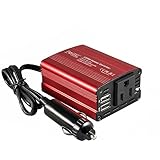
FOVAL’s compact 150W inverter is a straightforward corded alternative with conventional USB-A charging. The Classic Red listing should be matched separately from higher-power FOVAL products. This is a targeted choice rather than an automatic recommendation for every shopper. Its role in the comparison becomes clearer when you consider the setting in which it will be used. The relevant details are the exact configuration and the practical compromises that come with it, especially when a superficially similar alternative is designed for a different situation.
Key Specifications
- Rated AC class: 150W
- Input: 12V DC
- Output: nominal 110V AC
- AC outlets: one
- Dual USB: 3.1A shared total
What We Like
A simple one-outlet layout may be enough for a small compatible charger. The shared USB rating is clearly different from modern USB-C Power Delivery. For shoppers with that priority, this is more meaningful than a cosmetic difference. It creates a clear point of comparison with the other products and helps explain why a different person might reasonably prefer a different selection.
What Could Be Better
The two USB ports do not each provide the full shared rating. Do not interpret broad retailer device examples as approval for a particular medical appliance or high-demand load. Buyers should decide whether that compromise is acceptable in their own setting. A feature can be well executed and still be the wrong match for a particular user, so suitability deserves more weight than a general claim of quality.
Final Verdict
A basic option when modest AC use matters more than fast USB-C charging.
5. YSOLX 150W Compact Car Inverter
The 150W YSOLX is another small corded design. The exact wattage matters because some older retail identifiers now lead to higher-power models with different features. There is a good reason to compare this option separately instead of treating it as interchangeable with the others. Details that seem minor in a product photograph can become significant during everyday use. Match its documented features with your priorities first, then decide whether its strengths justify any extra attention to fit, care, or setup.
Key Specifications
- Rated continuous class: 150W
- Input: 12V DC
- AC output: nominal 110V
- AC outlets: one
- Dual USB: 3.1A shared total
What We Like
The compact format and simple connection layout can be appropriate for occasional low-power electronics. It offers a direct comparison with other basic dual-USB-A units. There is value in having a clear reason for the purchase. Buyers who recognize this need in their own routine can make a more confident comparison without relying on vague promises or treating every available feature as equally important.
What Could Be Better
Verify the actual 150W model and delivered label. Avoid using specifications or accessory photographs from the brand’s 200W, 300W, or 500W products. The practical response is to verify the relevant details before purchase and to keep expectations aligned with the documented design. Do not assume that another version or an accessory shown elsewhere is automatically included in the configuration being ordered.
Final Verdict
A relevant basic alternative when the precise model can be confirmed.
6. Eaton Tripp Lite PowerVerter PV150
PV150 is an AC-focused inverter with a detailed manufacturer specification sheet. Its role is providing one small AC outlet rather than acting as a multiport fast-charging hub. For the right user, a focused design can be more useful than an extensive collection of extras. This selection is most interesting when its intended role aligns with a task you already perform. Consider the entire ownership experience, including storage and routine care, rather than judging the purchase solely by the first impression or the product name.
Key Specifications
- Continuous output: 150W
- Instantaneous peak: 300W
- Input: 12V DC
- Output: 120V AC
- Outlet: one
- Cable: approximately 3 feet
What We Like
Clear continuous and instantaneous ratings make the specifications easier to interpret. The cable gives placement flexibility without relying on the accessory socket to support the body. This is an advantage to evaluate in context rather than as an isolated selling point. When it matches your intended use, the design can make a more compelling choice than an alternative whose main strengths would rarely be used.
What Could Be Better
The peak rating is not usable continuous capacity. It lacks the modern USB charging emphasis of several alternatives, so buyers may still need appropriate device chargers. This does not make the product a poor choice, but it narrows the situations in which it is the most sensible one. Consider whether the tradeoff would affect you regularly or only under circumstances that are unlikely to arise.
Final Verdict
A useful choice when clear AC documentation matters more than integrated USB features.
7. Scosche InVert 150, PI150M
PI150M combines a small inverter with USB charging and a short cable arrangement. It is different from Scosche’s cup-holder PI150CUP despite sharing the InVert 150 name. This alternative deserves a closer look when the more conventional choices do not quite match your needs. The important question is whether its particular design offers an advantage in your situation. A careful comparison should include the version being ordered and any practical limitations, rather than assuming that a recognizable label guarantees suitability for every buyer.
Key Specifications
- Rated class: 150W
- Input: 12V accessory socket
- AC output: nominal 110V
- Ports: one AC, one USB-A, one USB-C
- Cable: 20 inches
What We Like
The detachable-cable format gives an identifiable placement option. A short cable may help keep the unit close to a suitable ventilated location without excessive loose wiring. The useful distinction is the relationship between this feature and the intended task. Shoppers who have encountered the limitation it addresses have a concrete reason to shortlist it, while others may prefer one of the simpler alternatives.
What Could Be Better
A USB-C connector alone does not establish high-wattage Power Delivery. Confirm the port ratings of the delivered version and do not assume it shares the cup-holder model’s specifications. That concern deserves a place in the comparison alongside the strengths. If it affects a nonnegotiable requirement, choosing a different design is usually more useful than expecting this one to behave like a product intended for another purpose.
Final Verdict
A useful form-factor alternative when a short cable and basic USB ports suit the vehicle.
8. Scosche InVert 150 Cup Holder, PI150CUP
PI150CUP uses a cup-holder shape and a different port arrangement from PI150M. The extra outlet count is a convenience feature rather than an increase in total available AC power. The buying case here rests on a specific combination of features, not on a claim that one option can serve everyone equally well. Look at how it would fit into an ordinary day and what you would have to change to accommodate it. Those practical details often reveal more about suitability than promotional language or a long specification list.
Key Specifications
- Rated class: 150W
- AC outlets: two
- USB-C: 30W
- USB-A: 18W
- Cable: 3 feet
- Format: cup-holder body
What We Like
The layout can keep the body in a defined location while offering two charger connection points. The published USB ratings make its fast-charging role clearer than a connector name alone. That gives the product an identifiable place in the comparison. It is especially useful to buyers who can connect the feature with a recurring requirement, rather than selecting it because the description sounds more advanced.
What Could Be Better
Cup-holder fit and ventilation must both be checked. Do not place drinks beside an electrical device or add the outlet ratings together as if each supplied 150W. Check this aspect carefully if you are buying for someone else or cannot easily evaluate the product before use. The best option is one whose limitations are understood in advance, with a suitable return policy if the configuration proves unsuitable.
Final Verdict
A placement-focused option for a compatible dry cup-holder location.
9. Energizer EP150 Pure Sine Wave Inverter

EP150 is the pure-sine-wave model, distinct from Energizer EN150 and the much larger EP1500. Similar names make model verification especially important. This selection is worth considering as a deliberate alternative to the more obvious starting points. Its features should be judged in the context of the person and setting involved. Identify the main reason you are shopping before comparing versions, since a feature that is valuable for one situation may add little practical benefit in another.
Key Specifications
- Model: EP150
- Continuous AC: 150W
- Peak: 300W
- Waveform: pure sine
- Nominal AC: 115V
- Frequency: 60Hz
What We Like
The manufacturer’s manual explicitly identifies the waveform and continuous output. That is useful when a device manufacturer requires a specific input waveform. The advantage matters most when it aligns with a clear preference. This is a good example of why the best purchase is often the one with the right combination of details for a particular person, rather than the broadest appeal.
What Could Be Better
Pure sine wave does not overcome insufficient capacity, an unsuitable vehicle socket, or a device’s startup demand. Availability and new-versus-refurbished condition also need checking. Shoppers should avoid overlooking this detail merely because the product has another appealing characteristic. Compare the complete set of requirements, including any conditions that would make the purchase inconvenient or unsuitable for the intended person.
Final Verdict
A relevant waveform-focused option when the device requirements justify it.
Buying Guide
Check the Vehicle Socket Before the Inverter
Read the vehicle manual for the accessory socket’s power or current limit and any shared-circuit restrictions. A plug fitting physically does not establish sufficient supply capacity. USB loads and conversion losses also draw from the vehicle. Do not replace a fuse with a larger rating or improvise battery connections to overcome a socket limit. If the supply is inadequate, choose a different documented power arrangement. Write down the requirement that matters most before browsing. Then use it to eliminate options that cannot meet that requirement, even if they have other appealing features. This creates a useful shortlist and makes it easier to compare products on the same basis.
Distinguish Continuous Power from Peak Power
Continuous output describes the sustained rating under the specified conditions. A surge or peak figure applies briefly and does not turn a 150W inverter into a 300W continuous supply. Device startup demands can exceed the normal operating load. Compare the equipment’s input requirements with the inverter documentation and leave appropriate margin rather than planning around the largest number printed on the box. When comparing listings, make sure the details refer to the configuration being purchased. Similar photographs, alternate sizes, and bundled versions can obscure differences. Keep the exact model or variant in your notes so that the comparison remains consistent through checkout.
Read the Device Charger Label
Check voltage, frequency, input power, and any waveform requirement. A charger’s advertised device-output wattage is not always identical to its AC input demand. Several connected devices share the inverter’s available capacity. Do not assume that every laptop, charger, small appliance, or battery charger will behave the same way because it has a standard household plug. Think through an ordinary use case rather than an ideal one. Include the space available, the person involved, and any preparation that would be necessary. A feature is most valuable when it addresses a situation that actually occurs in that routine.
Decide Whether USB-C Can Replace the AC Step
A compatible USB-C Power Delivery connection may charge a device directly, while older USB-A ports serve different requirements. Check the supported power profiles and use a suitable cable. A USB-C connector is not proof of a 30W, 65W, or higher output. If a laptop needs more than a port can provide, it may charge slowly, lose battery under load, or decline to charge. A practical comparison considers the complete purchase. Include anything necessary to make the item useful, along with the time needed to learn, fit, maintain, or prepare it. A lower initial price does not automatically mean a more convenient ownership experience.
Verify the Waveform When It Matters
Pure sine wave and modified sine wave describe different AC outputs. Follow the connected equipment manufacturer’s requirements rather than assuming either is universally suitable. EP150 has explicit pure-sine-wave documentation; do not extend that claim to similarly named Energizer models. A suitable waveform still does not resolve voltage, capacity, startup, or vehicle-supply limitations. Avoid using broad marketing language as a substitute for a relevant specification. If a detail is essential and not clearly stated, ask for clarification before ordering. It is better to resolve a compatibility or care question than to make an assumption that is difficult to undo.
Choose a Secure and Ventilated Location
Direct-plug bodies save cable space but depend on socket position and clearance. Corded and cup-holder models allow different placement but still need airflow and protection from liquids. Keep the unit clear of pedals, controls, seats that move, and places where luggage can block vents. Check that the plug remains firmly seated without strain from a heavy AC charger. Consider how the product will be kept useful after the first few uses. Storage, cleaning, replacement components, and clear instructions can all influence whether an attractive purchase remains practical. Match the maintenance requirements to what the user is realistically willing to do.
Compare the Current Model and Support
Match the exact model suffix, port layout, input range, and condition before purchase. Older documentation can describe a different generation under a similar name. Confirm warranty coverage for the seller and region, and keep the manual and receipt. Do not select a refurbished unit accidentally when expecting new equipment. Clear documentation is more useful than a long unsupported list of compatible appliances. Finally, compare return conditions and the information supplied by the seller. Keep the original packaging until suitability has been established, and inspect the delivered version promptly. This is especially helpful when the product is a gift or will not be used immediately.
Safety Tips
Operate the inverter within both its own limits and the vehicle’s accessory-circuit limits. Follow the current inverter, vehicle, and connected-device instructions. Keep vents open and the unit dry, away from heat sources and flammable materials. Do not handle electrical connections with wet hands or use damaged cables, plugs, or housings.
Never connect a portable inverter output to household wiring or another power source. Do not bypass protection, fit an oversized fuse, or improvise connections. Stop using equipment that smells hot, repeatedly trips, becomes abnormally hot, or shows other signs of damage. A protective shutdown is a reason to investigate the load and setup, not repeatedly force the unit to restart.
Secure the inverter and cables so they cannot interfere with driving. Make adjustments while safely parked. Do not leave a powered inverter unattended, and follow the vehicle guidance on engine-off accessory use to avoid battery depletion. Never run a combustion engine in a garage or another enclosed space to support electrical use.
Do not assume that retailer lists mentioning CPAP machines or other medical equipment establish suitability. Medical and other critical equipment requires the device manufacturer’s approved power arrangement and an appropriate reliability plan. High-power heaters, hair dryers, kettles, and similar loads are outside the role of this small inverter class.
Frequently Asked Questions
Can a 150W inverter run any laptop?
No. Check the charger’s input requirements, the laptop’s demand, and the inverter and vehicle limits. Some combinations fit comfortably while others exceed the available power or require a different waveform or approved adapter.
Does a 300W peak rating mean 300W is available continuously?
No. Peak is brief. Use the continuous rating for sustained loads and check startup requirements separately. A short peak specification is not permission to run a higher-power appliance indefinitely.
Will every vehicle socket supply the full 150W?
No. The vehicle manual may specify a lower limit or a shared circuit. Conversion losses and other loads also matter. Choose within the most restrictive relevant rating rather than assuming the inverter label overrides the vehicle.
Is USB-C always fast charging?
No. The connector shape does not establish the charging protocol, voltage profiles, or maximum power. Check the exact port rating, the device requirements, and the cable’s capabilities.
Are the three BESTEK configurations identical?
They share a small-inverter role but differ in body and connection layout. Current USB specifications also differ from some older products using similar names. Compare the exact present version and delivered label.
Why are there only nine products?
The comparison prioritizes identifiable 150W-class configurations. Products with unclear continuous ratings, inconsistent identity, or a different actual wattage are not added merely to reach ten.
What is different about Energizer EP150?
Its manufacturer manual identifies a pure-sine-wave output. That distinguishes it from models with other waveforms, but it does not increase the continuous rating or guarantee compatibility with every device.
Can I use a power strip to add more outlets?
Additional outlets do not add capacity and may be restricted by the inverter’s instructions. Follow the exact documentation, total load limits, and vehicle circuit rating. Avoid creating an overloaded or unsecured arrangement.
Can it power medical equipment during travel?
Do not rely on a general retail compatibility claim. Ask the medical device manufacturer for its approved vehicle power solution and reliability requirements. A small consumer inverter should not be assumed suitable for critical equipment.
When is an inverter unnecessary?
If a device supports an appropriate direct vehicle DC or USB-C charger, that may meet the need without converting to AC and back. Verify the exact device and charger requirements rather than assuming every cable or adapter is equivalent.
Final Verdict
For a modern small-electronics setup, begin with the current BESTEK wide-input USB-C version and compare its cable arrangement with the two BESTEK PD30W direct-plug configurations. FOVAL and YSOLX offer simpler conventional USB alternatives. PV150 emphasizes clear AC specifications, while Scosche provides distinct cable and cup-holder layouts. Energizer EP150 is the documented pure-sine-wave alternative.
Choose around the vehicle socket, connected device, waveform requirements, and secure placement. Verify the current model and avoid treating peak power or extra outlets as additional continuous capacity. When a direct compatible USB-C or DC charger meets the need, it may be the more straightforward purchase.